
Mexican Cheese: The Ultimate Guide to the Flavors That Finish the Table

Mexican Cheeses: The Ultimate Guide to their Flavors
You’re too short to see what’s happening on the mesa.
The kitchen is busy—someone stirring beans, someone warming tortillas, someone humming along to music that’s been playing since morning. From where you stand, the counter might as well be a mountain.
Somewhere up there, the adults are working with tortillas, salsa, and the Mexican cheese that somehow makes everything taste better.
But then a hand appears.
Not rushed. Not dramatic. Just familiar.
Your abuela reaches down without even looking, like she’s done this a hundred times before. In her fingers is a small, soft prize: a scoop of requesón, one of the creamiest kinds of Mexican cheese, placed right at kid height.
You taste it before you even ask what it is.
Creamy. Slightly sweet. A little tangy.
You don’t know it yet, but this is your first real introduction to Mexican cheeses.
Moments like that happen in kitchens everywhere. Someone slicing queso fresco while waiting for tortillas. Someone crumbling cotija cheese over corn while a cousin steals a pinch. Someone pulling apart strands of queso Oaxaca just because it’s fun.
That’s the thing about Mexican cheeses.
Some of them rarely make a dramatic entrance.
But we sure all remember them once we’ve had a taste.
What Is Mexican Cheese?
Mexican cheeses developed across different regions of Mexico, shaped by local dairy traditions and everyday cooking habits.
Some Mexican cheese types are fresh and crumbly.
Some melt beautifully.
Some age until they become bold and salty.
But nearly all of them share the same idea:
They’re designed to work with food, not compete with it.
Instead of dominating the plate, Mexican cheeses complete it.
The Mexican Cheese Types Every Kitchen Should Know
Across Mexico there are dozens of regional cheeses, but a few Mexican cheese names appear again and again in everyday cooking.
Requesón
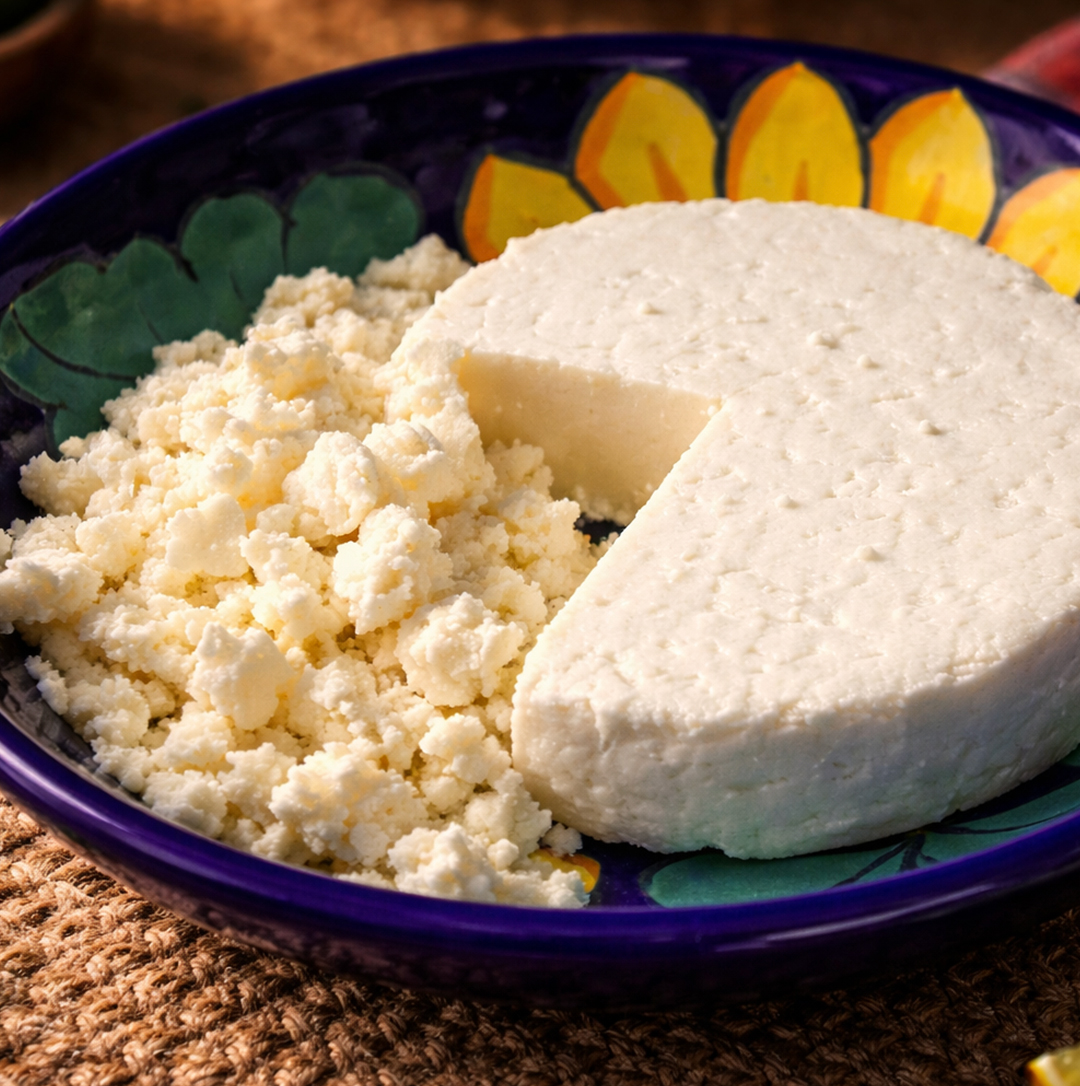
Requesón cheese/Queso requesón. Picture obtained from ChatGPT.
Soft, creamy, and delicate, requesón is similar to ricotta but traditionally made from whey left over during cheesemaking.
It’s one of the gentlest Mexican cheeses, often eaten simply with:
- tortillas
- fruit
In many families, requesón is the Mexican cheese kids taste first.
Mostly because it’s impossible not to sneak a spoonful.
Queso Fresco
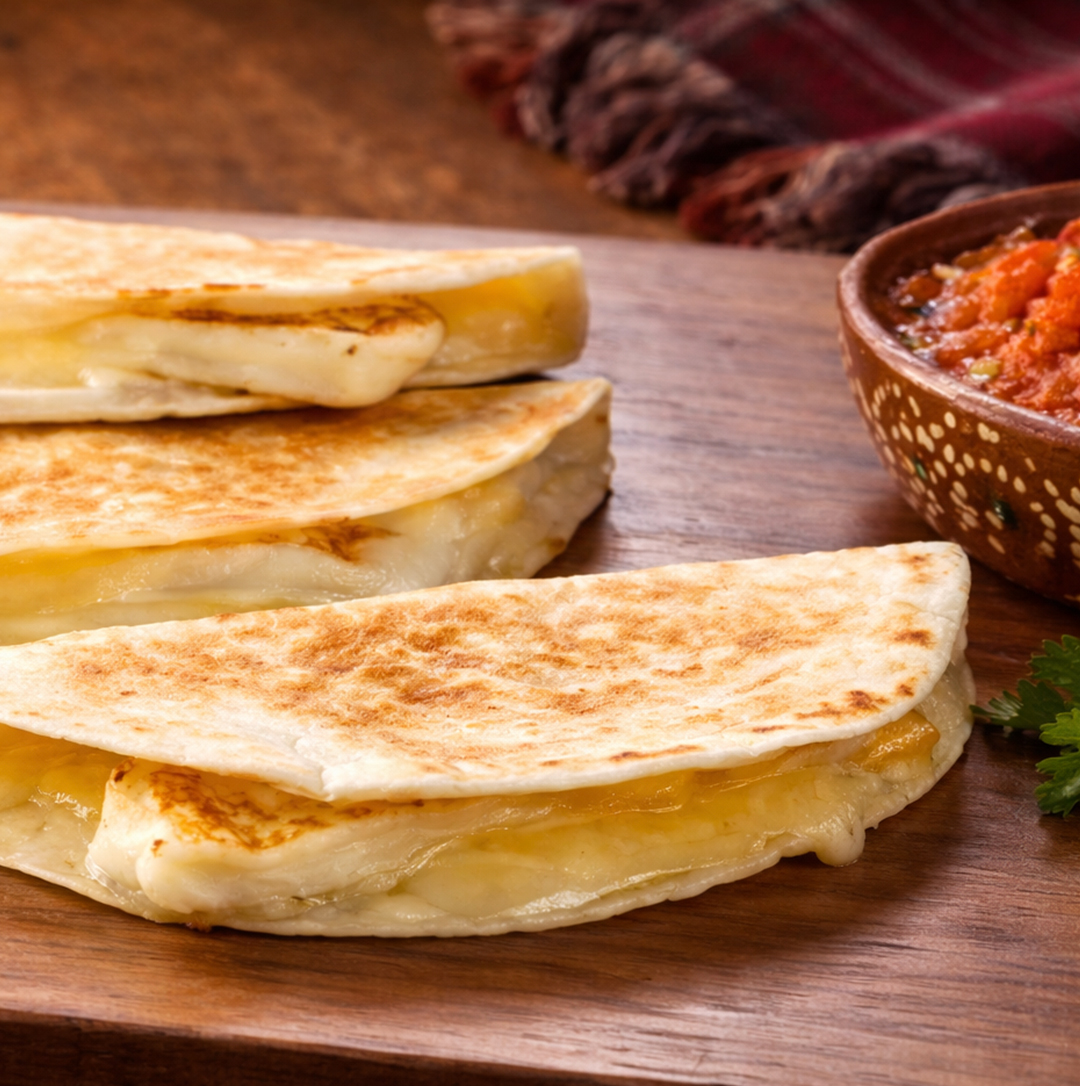
Queso fresco cheese/Queso fresco. Picture obtained from ChatGPT.
Queso fresco might be the quiet MVP of Mexican cheese types.
Fresh, crumbly, and lightly tangy, it brightens dishes without overpowering them.
You’ll see it on:
- tacos
- chilaquiles
- beans
- grilled vegetables
It doesn’t melt dramatically—it softens and holds its shape.
Which is exactly what a lot of dishes need.
Cotija Cheese
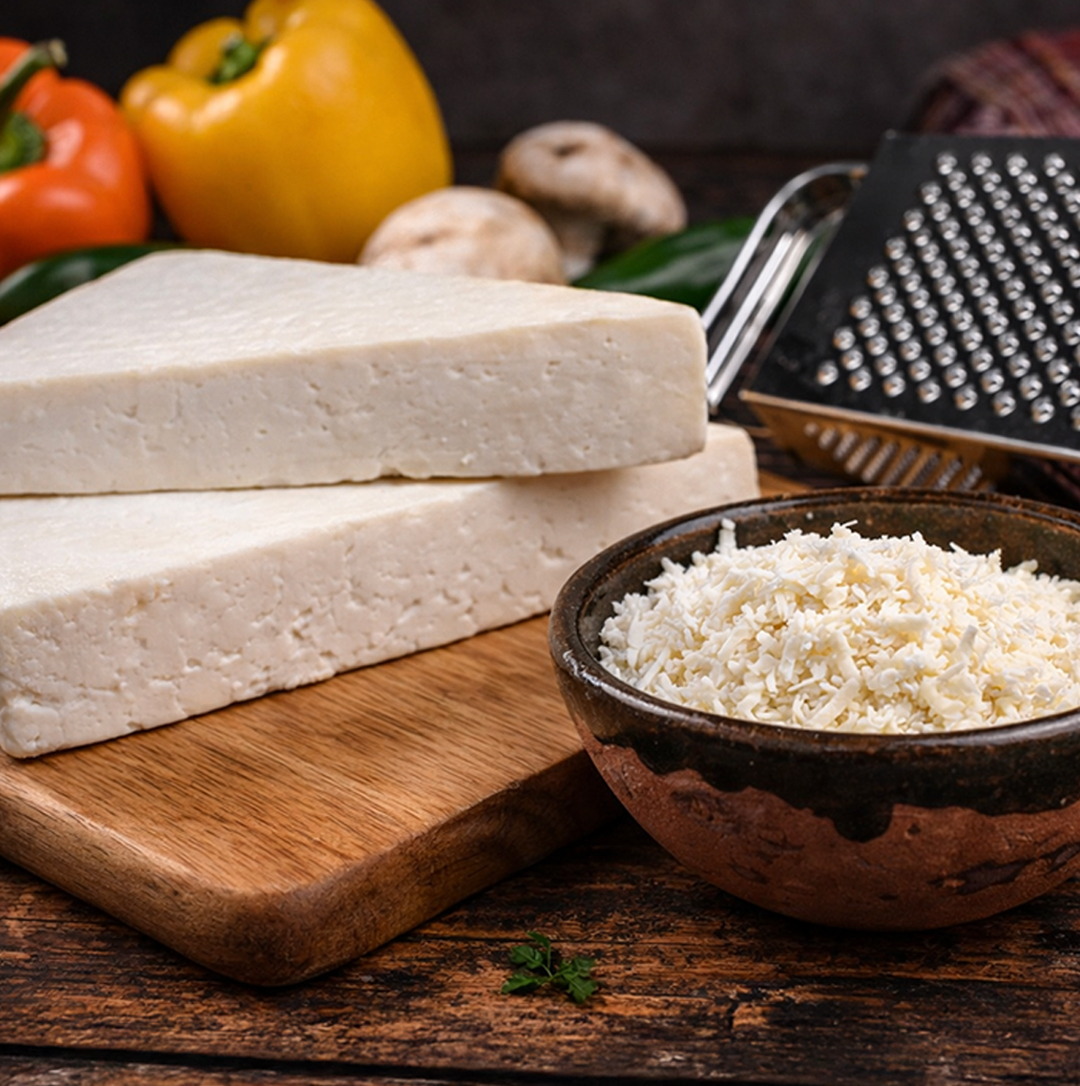
Cotija cheese/Queso cotija. Picture obtained from ChatGPT.
Bold, salty, and unapologetically flavorful, cotija cheese is often compared to Parmesan.
Cotija cheese is one of Mexico’s most recognizable aged cheeses, named after the mountain town where it originated.
You’ll find cotija cheese on:
- elotes
- esquites
- tacos
- salads
A sprinkle is technically enough.
But no one ever stops there.
Queso Oaxaca
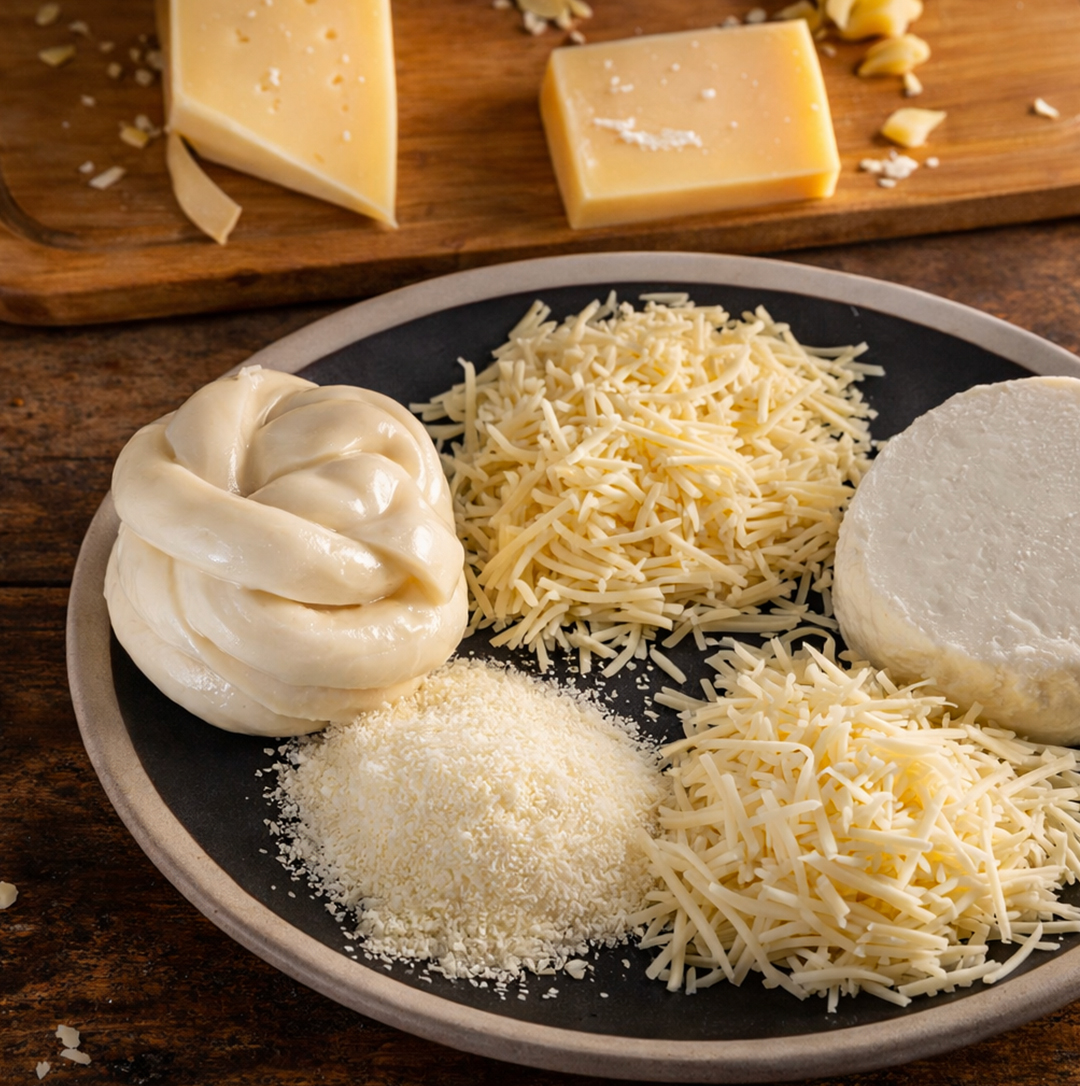
Oaxaca cheese/Queso Oaxaca. Picture obtained from ChatGPT.
If any Mexican cheese is famous for drama, it’s queso Oaxaca, or quesillo, as they call it in that region. .
This semi-soft cheese is made using a stretching technique that creates long strands, which are then wound into a ball.
When heated, those strands melt into legendary cheese pulls.
Oaxaca cheese shines in:
- quesadillas
- tlayudas
- melted tacos
When people imagine gooey Mexican cheese for tacos, this is usually the one they mean.
Panela
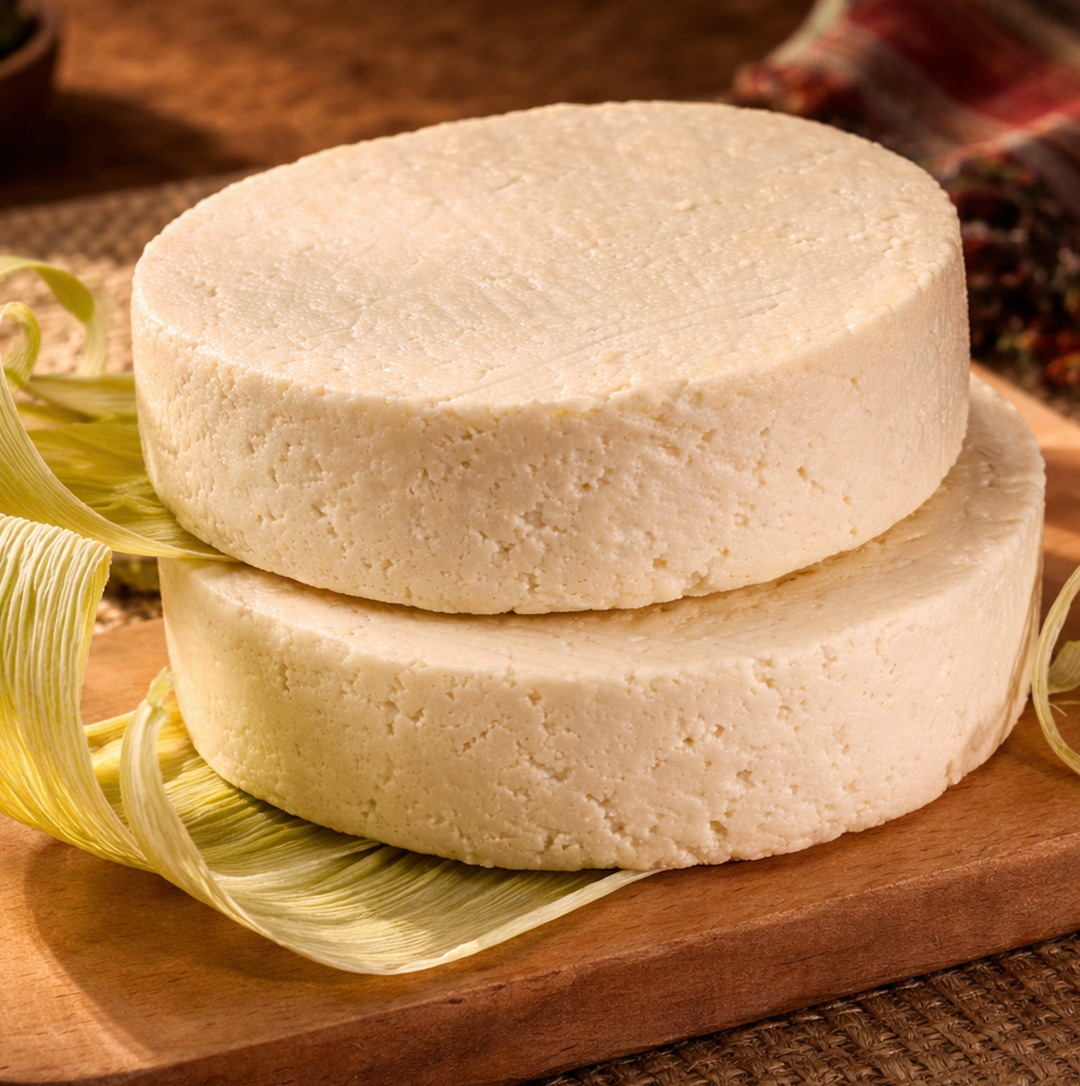
Panela cheese/Queso panela. Picture obtained from ChatGPT.
Panela is mild, fresh, and slightly firm.
Unlike many cheeses, it doesn’t melt easily, which means it can be grilled or pan-seared without losing its shape.
That makes panela ideal for:
- salads
- tacos
- grilled dishes
Among Mexican cheese types, it’s one of the most versatile.
Asadero
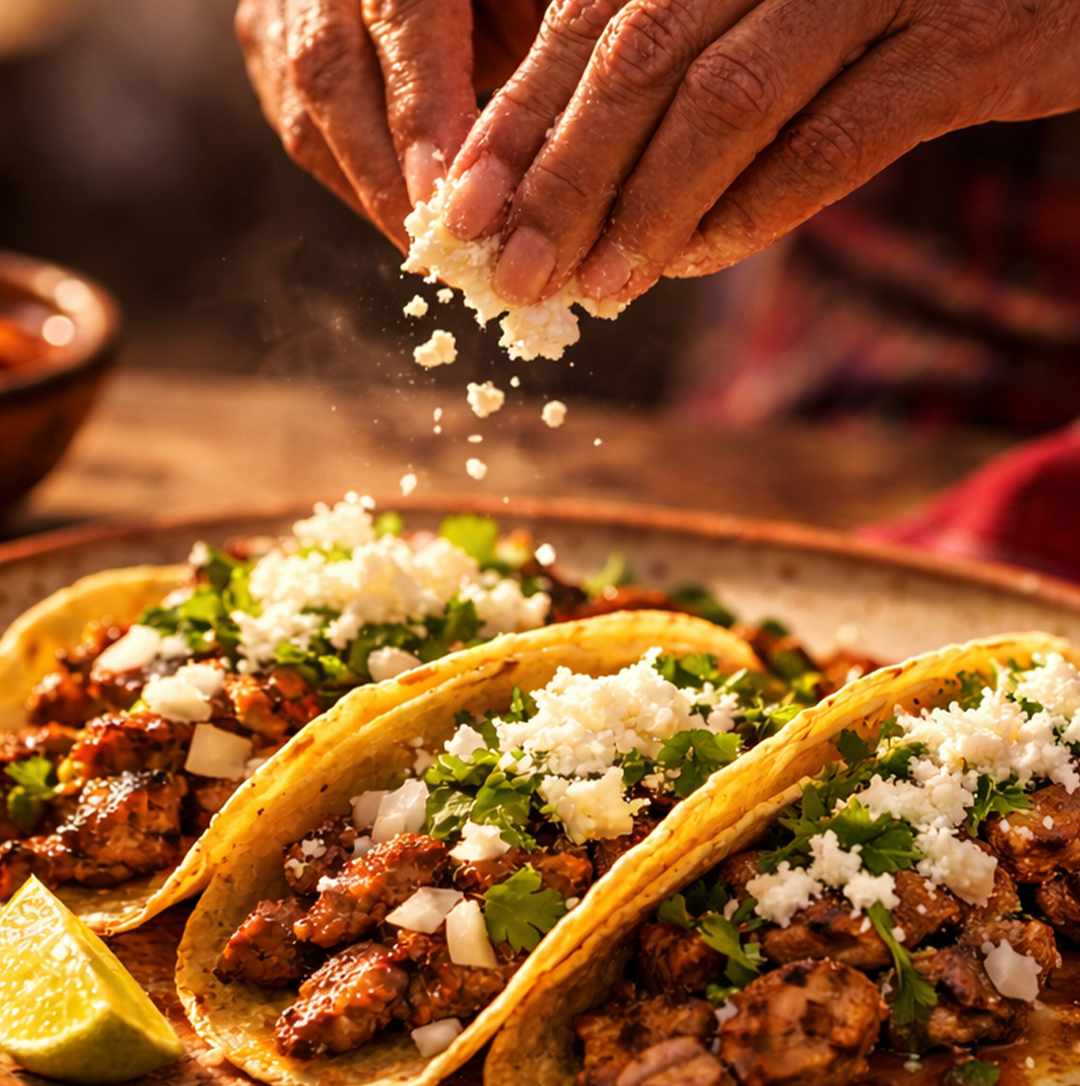
Asadero cheese/Queso asadero. Picture obtained from ChatGPT.
If a dish needs serious melt, asadero delivers.
This creamy Mexican cheese melts smoothly into tortillas and fillings, making it especially popular in northern Mexican cooking.
You’ll find it in:
- quesadillas
- tacos
- baked dishes
Why Mexican Cheese Works So Well With Tacos
Ver esta publicación en Instagram
Tacos are about balance.
There’s spice from salsa, richness from fillings, brightness from lime—and then Mexican cheese ties everything together.
Different cheeses bring different textures:
Cotija adds salt.
Queso fresco adds freshness.
Queso Oaxaca adds stretch.
Asadero adds creaminess.
Choosing the right Mexican cheese for tacos isn’t about rules.
It’s about instinct.
The Regional Roots of Mexican Cheese
The diversity of Mexican cheese reflects Mexico’s regional diversity.
For example:
- cotija cheese developed in Michoacán
- Oaxaca cheese comes from the Central Valleys of (you got it) Oaxaca
- Northern regions favor melting cheeses like asadero
Many are still produced by small dairies using traditional techniques passed down through generations.
Which means every bite carries a little history.
The Mexican Cheese Names Worth Remembering
If you're learning Mexican cheese names, start here:
- requesón
- queso fresco
- Cotija cheese
- queso Oaxaca
- panela
- asadero
Once you recognize these Mexican cheese types, you’ll start noticing them everywhere.
The Real Secret of Mexican Cheese
The truth about Mexican cheese is that it rarely tries to be the star.
It’s the crumble on the taco.
The sprinkle on the corn.
The spoonful handed to a kid who can’t see over the counter yet.
But take it away—and suddenly the meal feels incomplete.
Which is why someone always asks the same question before dinner starts:
“Did we add the cheese?”