
Granita, Sorbete, and Helado: What's the Difference?

Somebody's tío always orders three cups from the same freezer case just to prove a point, then spends ten minutes arguing with the vendor about what he actually got. We've all stood next to that guy. The granita looks like shaved ice dyed the color of a lime. The sorbete is smoother, almost creamy, and he swears up and down there's no dairy in it, like he's defending his honor. The helado just sits there being obviously ice cream, and somehow that's the one everybody's spoon keeps finding anyway, tío's included, mid-argument.
Nobody at that table agrees on the difference, and honestly, watching them sort it out one stolen spoonful at a time is half the entertainment. That's really the whole reason this comparison exists. Granita, sorbete, and helado get lumped together because they all show up in the same cooler, get scooped with the same paddle, and get eaten on the same hot afternoon standing in the same line. But they're built differently, and once you know what separates them, you'll never end up on the losing side of a freezer-case debate again.
Granita Is Ice That Refuses to Behave
Granita starts as fruit, sugar, and water, frozen slowly and raked with a fork every thirty minutes instead of churned in a machine. That raking is what keeps it from turning into a glacier you'd need a chisel for. Instead of smooth or creamy, granita comes out grainy and loose, closer to snow than to ice cream, and it has zero interest in holding its shape for a photo. That texture is the whole point. It's supposed to be a little rough, a little melty, and gone before you've made it back to your seat.
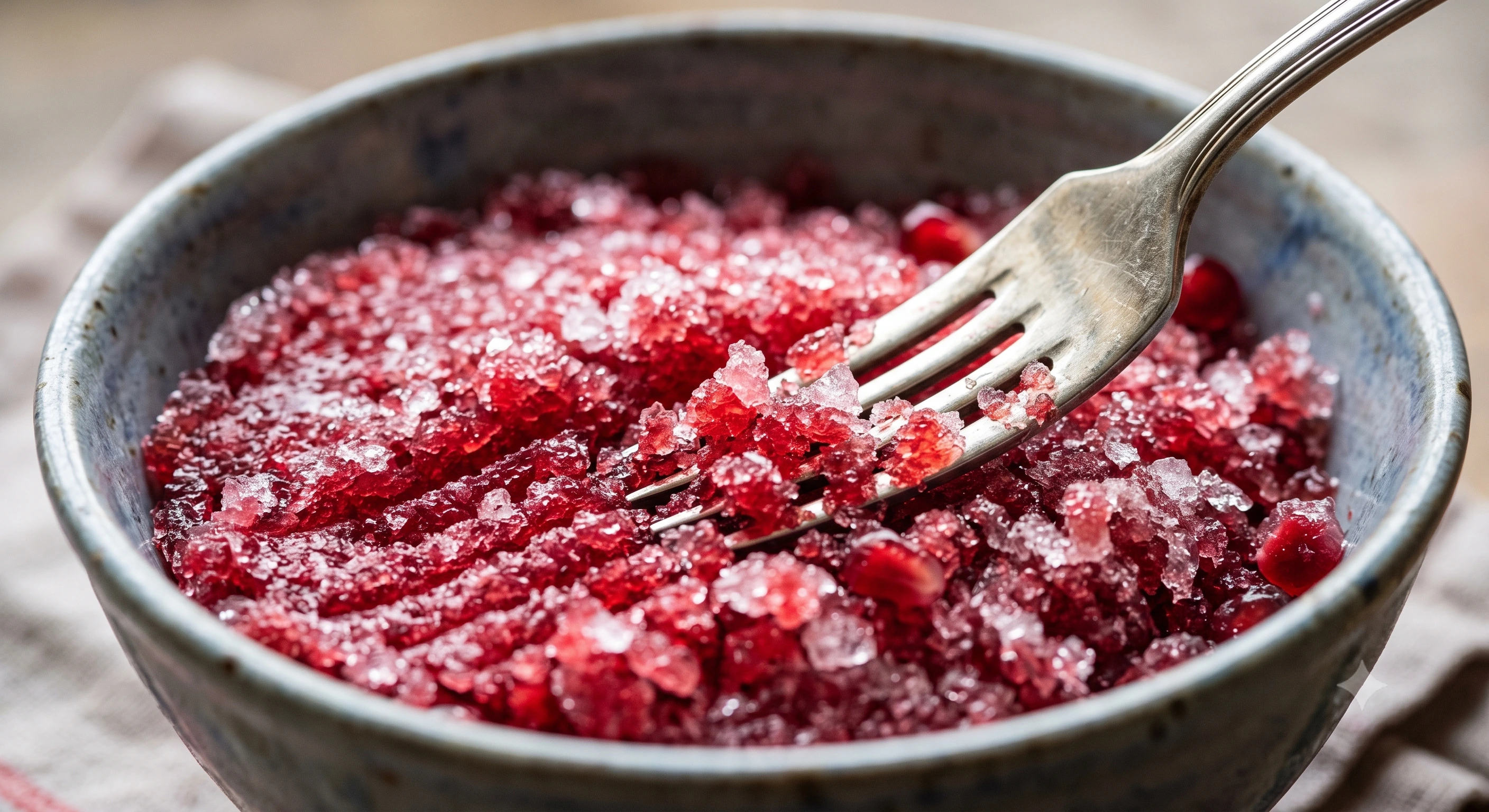
That fork has to work for it — real granita never comes out smooth.
Pomegranate and lemon versions are the most common, but the format works with pretty much any fruit water you'd want in a glass. Sicilian kitchens get most of the credit for popularizing granita, a technique with roots going back to Arab-influenced sherbets in medieval Sicily, per Britannica's entry on granita. But Latin American paleterías have been running their own parallel version for generations, especially along the coast, where fruit granita sits next to raspados and shaved ice carts like cousins who don't quite get along. If a vendor hands you something with visible ice crystals and a spoon that has to earn its keep, you're holding granita.
If pomegranate is the version that gets people fighting over the last spoonful, we go deep on exactly why in our pomegranate granita recipe. The short version: it's just pomegranate juice, a little sugar, a squeeze of lime, and a freezer that hates you slightly less than you'd expect. Rake it every half hour, let it sit until it's just barely holding together, and you've got something that tastes like a fight your mouth didn't know it wanted. Full method, ratios, and the one mistake that turns it into a pomegranate popsicle instead of granita — that's over on the recipe.
Sorbete Is the Smooth Cousin Nobody Explains Properly
Sorbete gets confused with granita constantly, and honestly, the mix-up makes sense, since both are usually dairy-free and both lean hard on fruit. The difference lives in the churn. Sorbete runs through an ice cream machine, which breaks up ice crystals as it freezes and turns the mixture into something dense and scoopable, texture-wise closer to helado than to granita, even with zero milk anywhere near the base.
Ver esta publicación en Instagram
Some versions add a little corn syrup or egg white to help with that smoothness, but the fruit still runs the show. Mango sorbete, tamarind sorbete, and guava sorbete all show up at family gatherings as the "lighter" option — the one someone brings for the cousin who insists they're not having dessert and then somehow finishes the whole cup before anyone notices. If it scoops like ice cream but melts clean without any dairy weight behind it, that's sorbete, quietly doing its job while granita gets all the attention for being difficult.
Helado Is the One Everybody Actually Wants
Helado is simply the Spanish word for ice cream, covering everything from soft-serve carts to dense, churned batches built on condensed milk and cinnamon. This is where cajeta, coconut, and vanilla-forward flavors live, and it's built around cream and milk fat instead of fruit and water. That fat is exactly why helado feels heavier and richer than granita or sorbete, and exactly why it's the flavor that disappears first at every single gathering, no exceptions, no matter how many people swore they were "just having a small scoop."
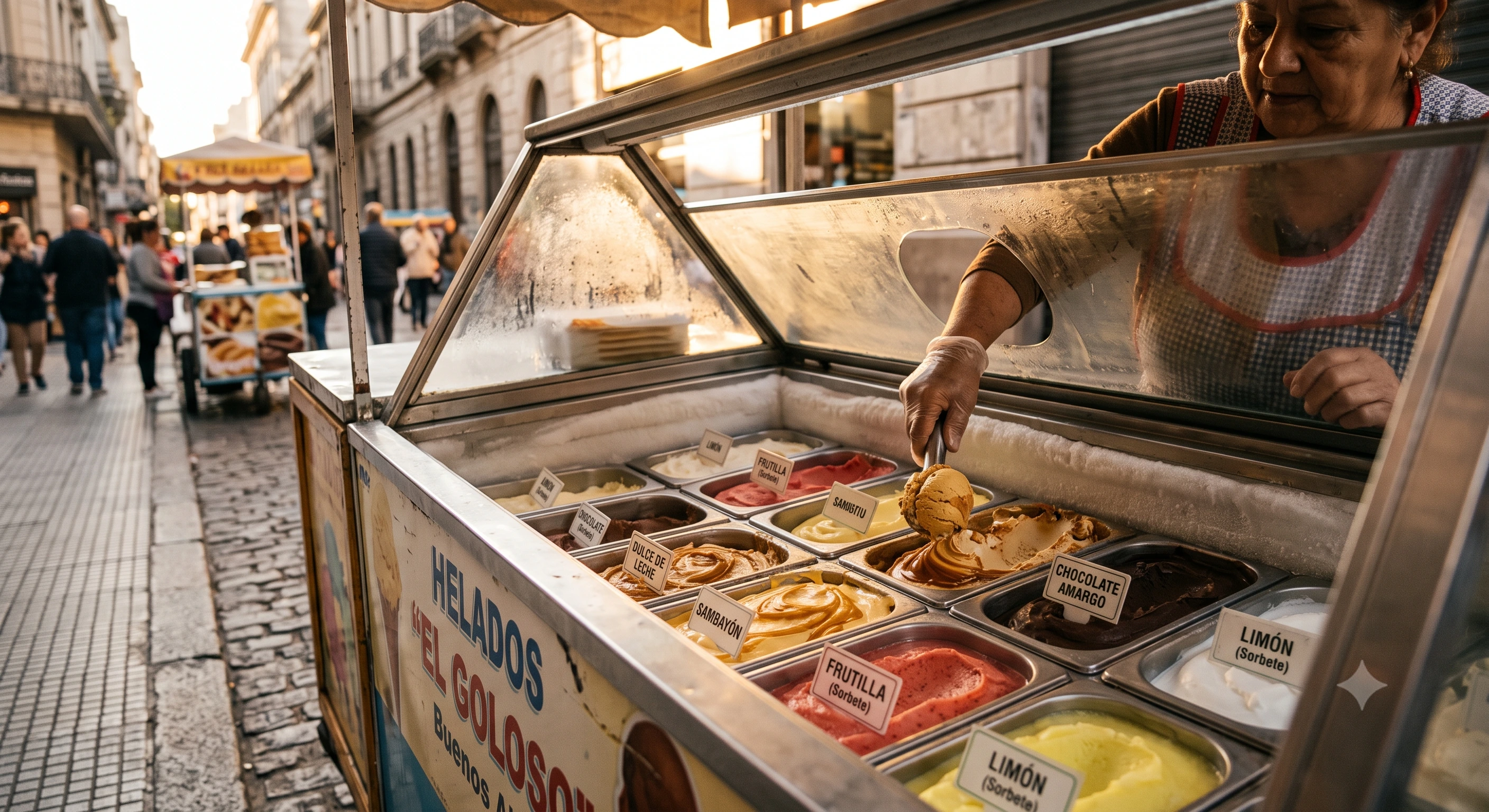
This is where the argument always starts — and where it never really ends.
If cajeta's ever come up at your table as a topic worth arguing about, we've already made the case for why cajeta ice cream deserves its own devoted following. Helado artesanal takes the format even further, made in small batches with real fruit, real dairy, and none of the stabilizers that keep supermarket pints from melting the second they leave the freezer. The texture runs denser, the flavor hits harder, and the price tag usually reflects that an actual person stood over a machine instead of a factory line running it.
So Which One Do You Actually Want: Granita, Sorbete, or Helado?
It comes down to texture more than flavor, honestly. Granita is for when you want something closer to flavored ice, loose and refreshing, gone in five minutes flat. Sorbete is for when you want the shape and scoopability of ice cream without the cream weighing it down. Helado is for when you want the real thing, dense and rich, worth slowing down for instead of racing the melt.
Next time you're standing at the paletería and you're not entirely sure what you just ordered, check the texture before you check the flavor. The ice crystals, the scoop, and the melt will tell you more than the label ever will — and it'll save you from becoming the tío at the table next summer. For the full lineup of what belongs in that freezer case, our guide to Latin frozen desserts rounds up everything worth chasing down this season.