
“El Ingrediente Secreto”: Celebrating Hispanic Heritage Month Through Traditions, Food, and Memory

- Latin food
- Hispanic Heritage Month
- Heritage Month
- hispanic traditions
- Heritage
- Latin American Traditions
Every September 15, something clicks over on the calendar: Hispanic Heritage Month begins, timed to the independence days of several Latin American countries — Costa Rica, El Salvador, Guatemala, Honduras, and Nicaragua all mark theirs that day, with Mexico's following on the 16th. It's a date that means something specific to a lot of households, even if the rest of the country is only catching up on the calendar this year.
You already know the highlight reel: Bad Bunny turning reggaetón into a genuinely global sound, Jennifer Lopez's decades-long run at the top, and Bruno Mars, whose music has never hidden the Puerto Rican side of his family. Latin talent has been headlining American culture for a while now. But treating this month like a highlight reel skips the part that actually built it — the sacrifices nobody puts on a highlight reel, the recipes passed down without a single written measurement, the whole layered story underneath the fame.
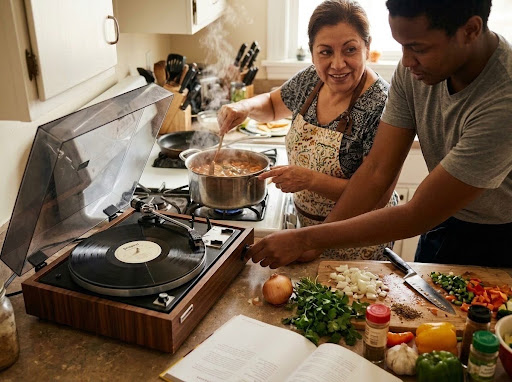
Image generated with Gemini.
That fame also doesn't fit into one box, and neither does the community behind it. As we put it in Our Heritage Month opening article, “while our heritage is Hispanic, it's also Indigenous, African, Asian, European and more” — we are not monolithic, and “although we are all forged from the same flame, we are made from different steel.” Some families' roots in this land go back generations before any border was drawn where it now stands; others arrived last year. Every place, belief, and lineage this community comes from deserves to be recognized on its own terms, not folded into one story for convenience.
The numbers back this up in scale, if not in nuance. Hispanics make up 19% of the US population, and the Census Bureau counted roughly 63.7 million Hispanics living in the country as of 2022. Recognizing that scale is really just recognizing how long and how deeply Latin culture already runs through American science, art, politics, and sports — not as a guest culture, but as one of the ones that helped build the house. Mostly, this month is a chance to ask questions, try the dish you've been eyeing at the office potluck, and get curious about a culture that's been headline-worthy long before anyone outside it noticed.
You Don't Have to Be Latino to Show Up (You Just Have to Show Up Right)
Latinxs didn't just clock into American life and clock out. They opened businesses, invented dishes, started conversations, and got very good, out of sheer necessity, at explaining — for what feels like the fifteenth time — that Mexican food and Spanish food are not the same thing. At this point, that patience deserves its own medal.
So how do you actually join in if you're coming to this from outside the culture? Start by listening — really listening — when a friend tells you about their abuela's kitchen, their family's history, or the one dish that only tastes right when a specific person makes it. None of that requires a translation. It just requires paying attention.
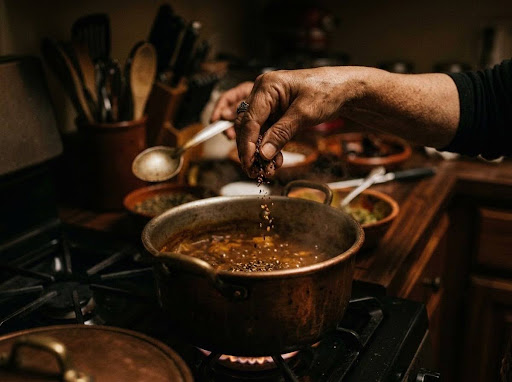
Image generated with Gemini.
And to be clear: showing up to a quinceañera you were invited to, attempting two steps of salsa or merengue (badly, at first), or ordering an empanada instead of a hot pocket is not cultural appropriation. It's called being invited somewhere and having decent manners. Go to the local festival. Try the dance. Order the thing you can't pronounce yet, then look up the correct pronunciation afterward — you'll leave with a new word and, more importantly, a very good meal.
Speaking of good meals — eating your way through Latin America's cooking is hands down the easiest way to celebrate Hispanic Heritage Month, and quite possibly the most delicious homework you'll ever get. Savory tamales, sweet churros, and everything in between can take you from a Caribbean beach to a table in the Andes without a passport, a boarding pass, or motion sickness.
Food has always been Latin culture's love language, and not just for the flavors. It's the stories and traditions that come with them — which is the real difference between a recipe and abuela's recipe. One has instructions. The other comes with commentary. And once the plates are empty, the real tradition kicks in: sobremesa, the art of staying at the table long after the food's gone, just to keep talking.
Ways to Get Involved (Beyond Reposting a Graphic)
If you're ready to celebrate this month in a way that's respectful, curious, and doesn't stop at a social media caption, here's where to start:
- Attend cultural events — festivals, concerts, art exhibits — and stick around past the free samples.
- Read books and articles on Hispanic history and culture, written by people who actually lived it.
- Learn Spanish, or go for extra credit and try an Indigenous language like Nahuatl or Quechua.
- Support Hispanic-owned businesses, with actual money, not just a follow.
- Volunteer with Hispanic organizations doing work in your own city.
- Cook Latin recipes — bonus points if you attempt the rice measurement-free, the way abuela does.
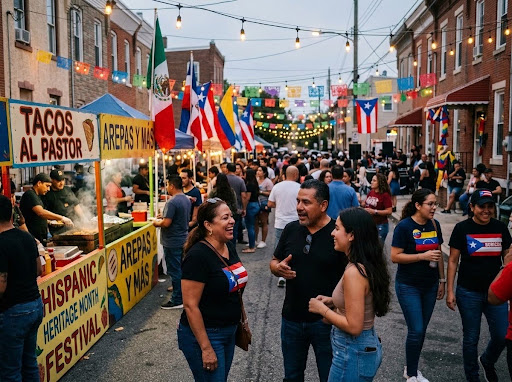
Image generated with Gemini.
Fun fact: there are over 60,800 restaurants with a South and Central American or Caribbean menu across the US. Skip the chain you've already memorized and find the one that's family-owned instead. You'll probably leave full and with a new honorary tía who isn't even related to you.
Or skip the list entirely and take the shortcut: find the block party, the backyard cookout, the community center hosting live music this weekend. Culture rarely waits behind a velvet rope. Most of the time, it's just wherever the food and the music already are, and the only invitation required is showing up hungry.
“El Ingrediente Secreto”: Build Your Own Narrative
Hispanic Heritage Month is an invitation — to celebrate diversity, recognize contributions, and admit that Latin culture has been shaping American life the whole time, loudly and quietly both.
Is that the whole assignment? Not even close. This is also the month to get curious about your own story. Ask where your family actually comes from — Indigenous, African, Asian, European, or some combination nobody's fully mapped out yet — not the Wikipedia-summary version, but the real one, with the town names and the family disagreement over who actually invented that one recipe. Learn a few words from wherever your people are from. Get the family recipe written down before it disappears with the one relative who refuses to measure anything. Then start building the traditions you'll hand down to whoever comes next.
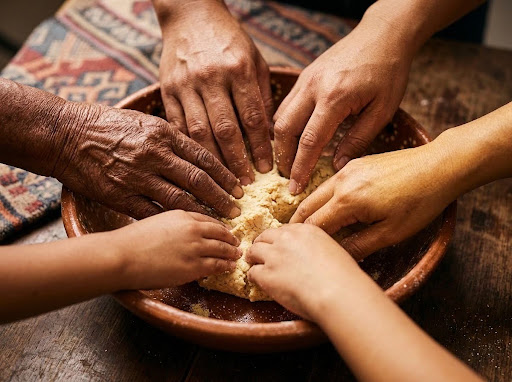
Image generated with Gemini.
“El Ingrediente Secreto” is Spanish for “the secret ingredient,” and it's rarely just an ingredient. Sometimes it's the extra spoon of cinnamon nobody bothers to measure. Sometimes it's the story someone tells while the ravioli's rolling out on the counter — the one you've heard forty times and will still ask for again. Consider this your invitation to guess Latin cuisine's secret ingredient, then go find your own.
This country has always been shaped by people carrying more than one heritage at once — which is exactly why we get to trade recipes, learn each other's histories, and sit at one very crowded, very delicious table together. So pass down el ingrediente secreto. Someone, somewhere, is counting on you to remember it.