
Are These Popular Latin American Ingredients Native Or Imported?
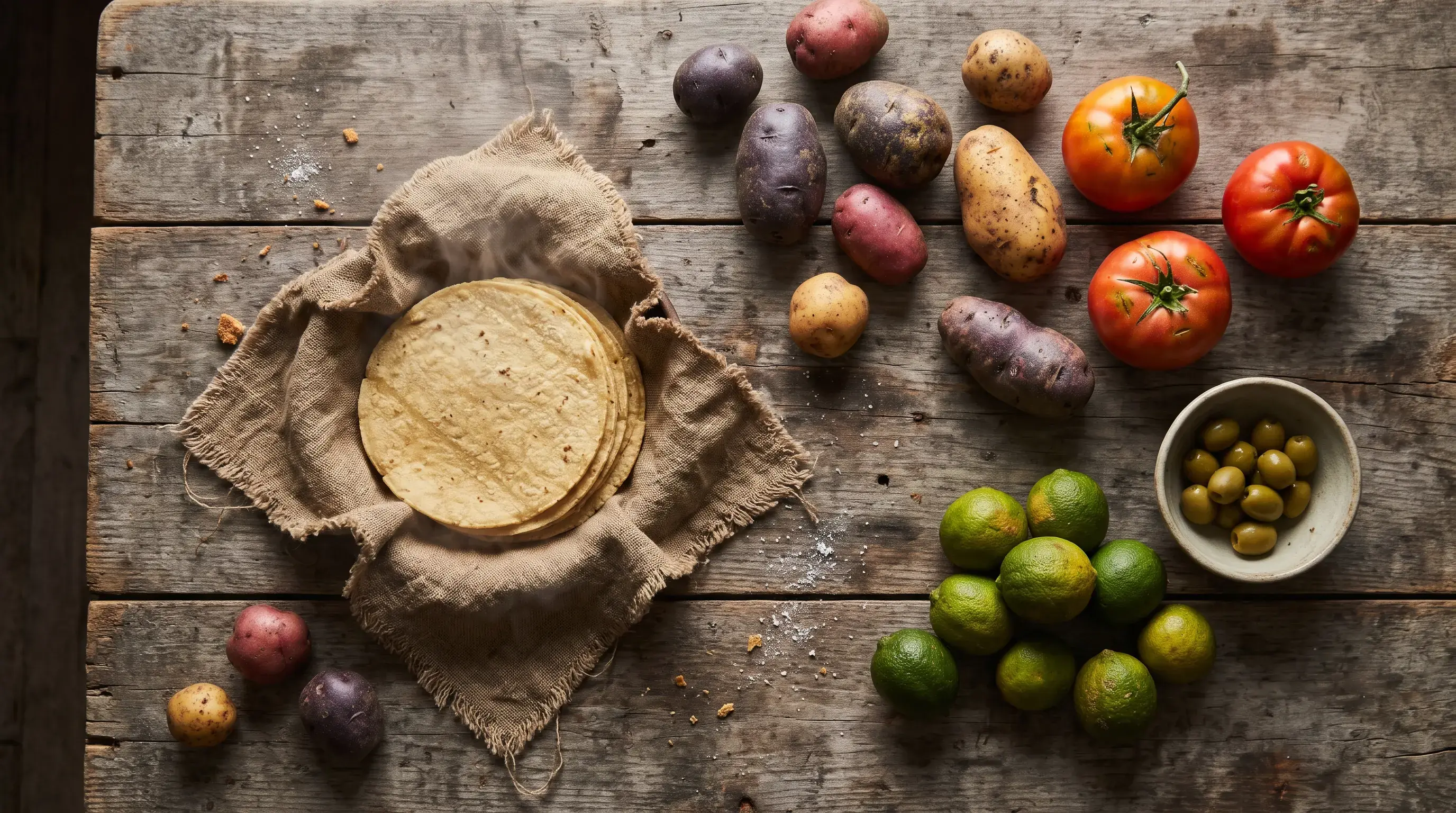

Think about the last table you sat at. Tortillas warm in a cloth. A bowl of salsa that's been chipped at the rim for years. A wedge of lime on something cold. Papas sizzling in the pan. A green olive tucked into the picadillo. Every one of them traveled to get there, and not all of them started where you'd guess.
Some of the most beloved Latin American ingredients were feeding people across the Americas for thousands of years before a single European ship showed up. Others crossed the Atlantic and moved in so completely that cooking without them feels unthinkable. Here are five that prove the pantry has always been a mix of both, and where each one really came from.
We'll take them one at a time, starting with the three that never needed a passport. Then the two that did.
Three Latin American Ingredients That Were Here First
Corn, potatoes and tomatoes didn't need an introduction. They were already home. The rest of the world just took a few centuries to catch up.
Corn: Nine Thousand Years of Masa
Corn begins in southern Mexico, where early farmers slowly shaped a wild grass called teosinte into something with real kernels. Smithsonian researchers put the start of that process at around 9,000 years ago, and it wasn't quick. Partly domesticated corn was already traveling to South America more than 6,500 years ago, still being reshaped by the people who grew it. By the time the Maya, Aztec and Inca built their societies, maize was holding up the whole table.
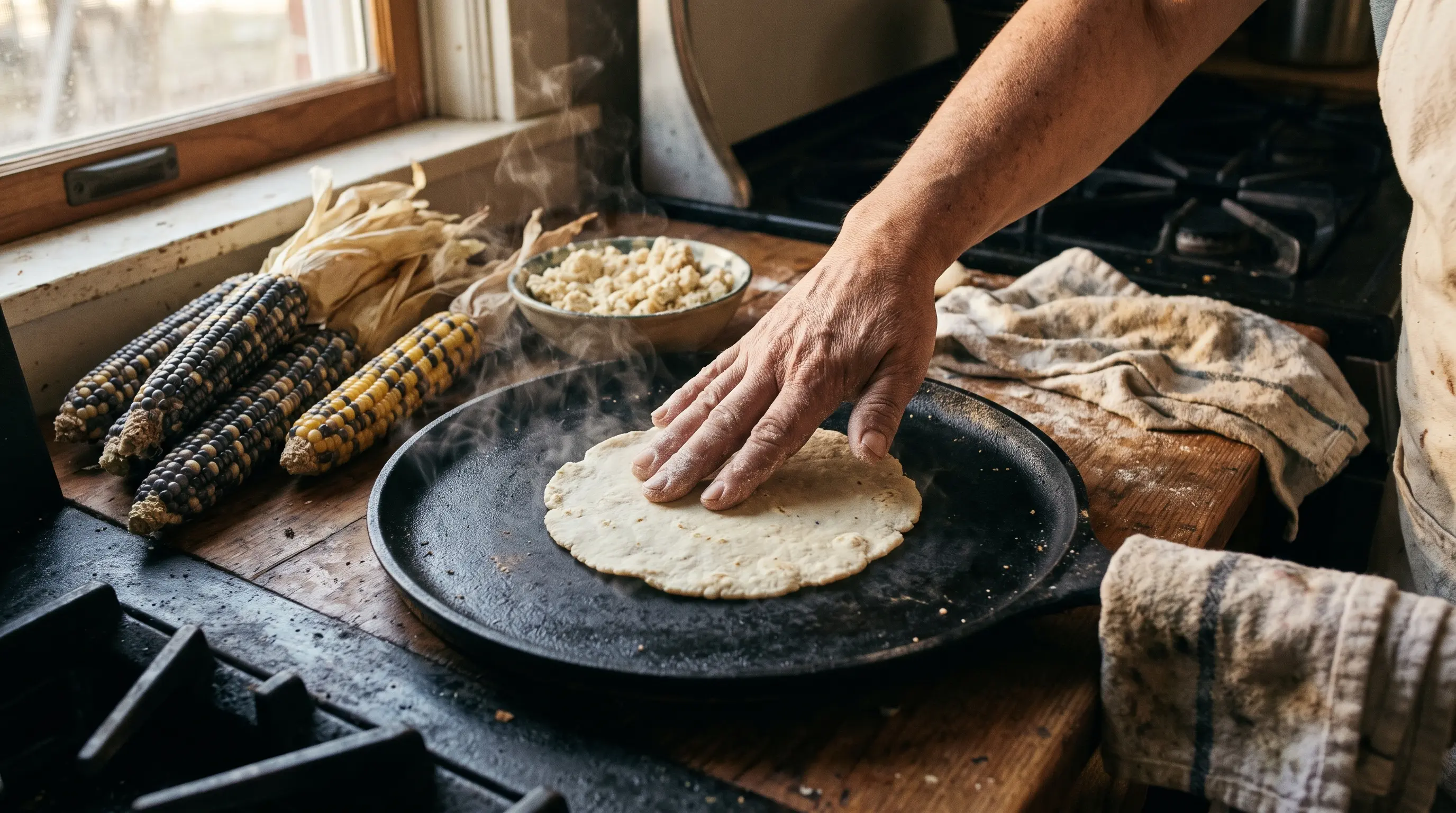
Nine thousand years in, the comal is still hot. Image generated with Gemini.
Now it's everywhere you eat. The tortilla puffing on the comal. The tamal in its husk. The arepa, the pupusa, the sope. The elote with mayo, cotija and chile. It's hard to find a Latin American table without it. Anyone who grew up near a tortilla press knows the sound it makes when it closes, and the smell that follows. Our breakdown of corn tortillas vs. flour tortillas makes the case for staying loyal to corn, and these grilled elotes with a fall twist prove the cob still has moves.
Potatoes: Peru Before Ireland
Say potato and plenty of people think of Ireland, because of the famine in the mid-1800s. The potato's real home is the Andes. According to the International Potato Center, Andean farmers first domesticated it about 8,000 years ago, and Peru alone is home to roughly 2,500 native varieties. Spanish explorers carried it to Europe in the late 1500s as a botanical curiosity. Europe took a long time to take it seriously. In the Andes, meanwhile, families were already freeze-drying potatoes into chuño to get through the cold months, a technique that long predates anyone's idea of meal prep.
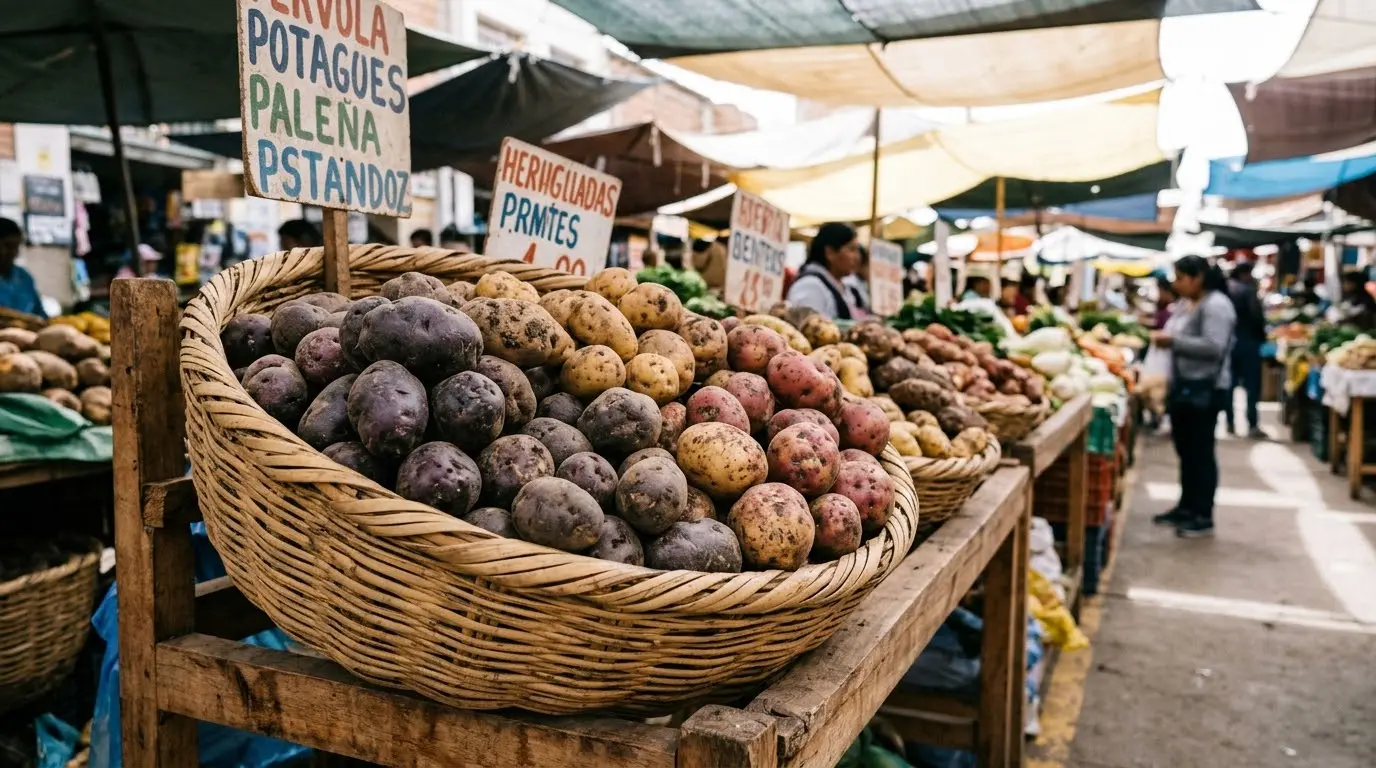
Peru alone grows around 2,500 native varieties. Image generated with Gemini.
At home, it never needed a makeover. Papa a la huancaína. Causa. Lomo saltado, the stir-fry where the potato is Andean, the rice is Asian and the dish is pure Peru, born in the Chinese-Peruvian kitchen known as chifa.
Fries have their own fan base too. Comedian Vanessa González talks fries and her Hulu special Mamona on Takeout & Talk.
Tomatoes: Older on Our Tables Than on Italy's
Picture Italian food without tomatoes and it falls apart. Yet the tomato's family tree starts in the Andes of what's now Peru and Ecuador, and it was in pre-Columbian Mexico that people domesticated it, according to NPR, citing Britannica, in its piece on the foods we owe to Indigenous Latin American cultures. The Aztecs called it tomatl. The Spanish turned that into tomate and started shipping it to Europe in the mid-1500s, where it took a while to win people over. So the next time someone calls the tomato Italian, you know the real story.
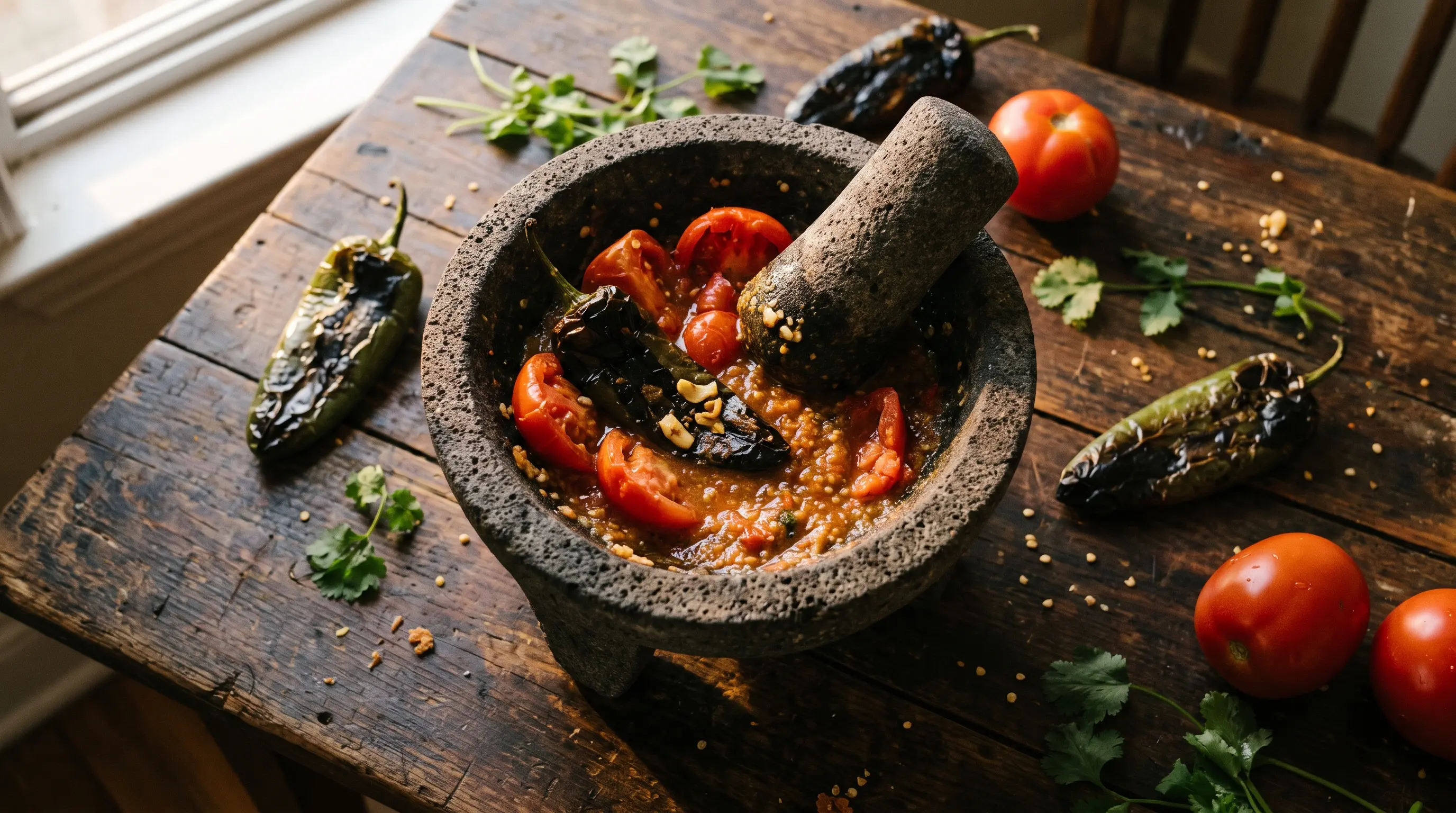
Tomato before tomato. Image generated with Gemini.
Here, it never had to prove itself. It's the base of salsa roja and caldo, of stews and rice. In Chile, the churrasco italiano wears tomato, avocado and mayo, a combination we get into in our story on the Chilean churrasco, the sandwich that built a nation.
Two Latin American Ingredients That Came by Ship
Now the plot twist. These two feel so native that people argue when you say otherwise.
Limes: Born in Southeast Asia, Adopted Everywhere
Limes aren't native to a single Spanish-speaking country. The World's reporting traces the Mexican lime from Southeast Asia to Spain and then to the Americas with the conquistadors, and UC Riverside citrus specialist Tracy Kahn explains that citrus itself appears to have originated in Southeast Asia. The crossing is generally placed in the 1500s.
That history explains why the vocabulary is such a mess. In Spain, limes were historically limones verdes, green lemons. In Mexico it's limón or lima depending on who you ask. In Ecuador, Bolivia, Venezuela and El Salvador, limón means the small, sour, green one.
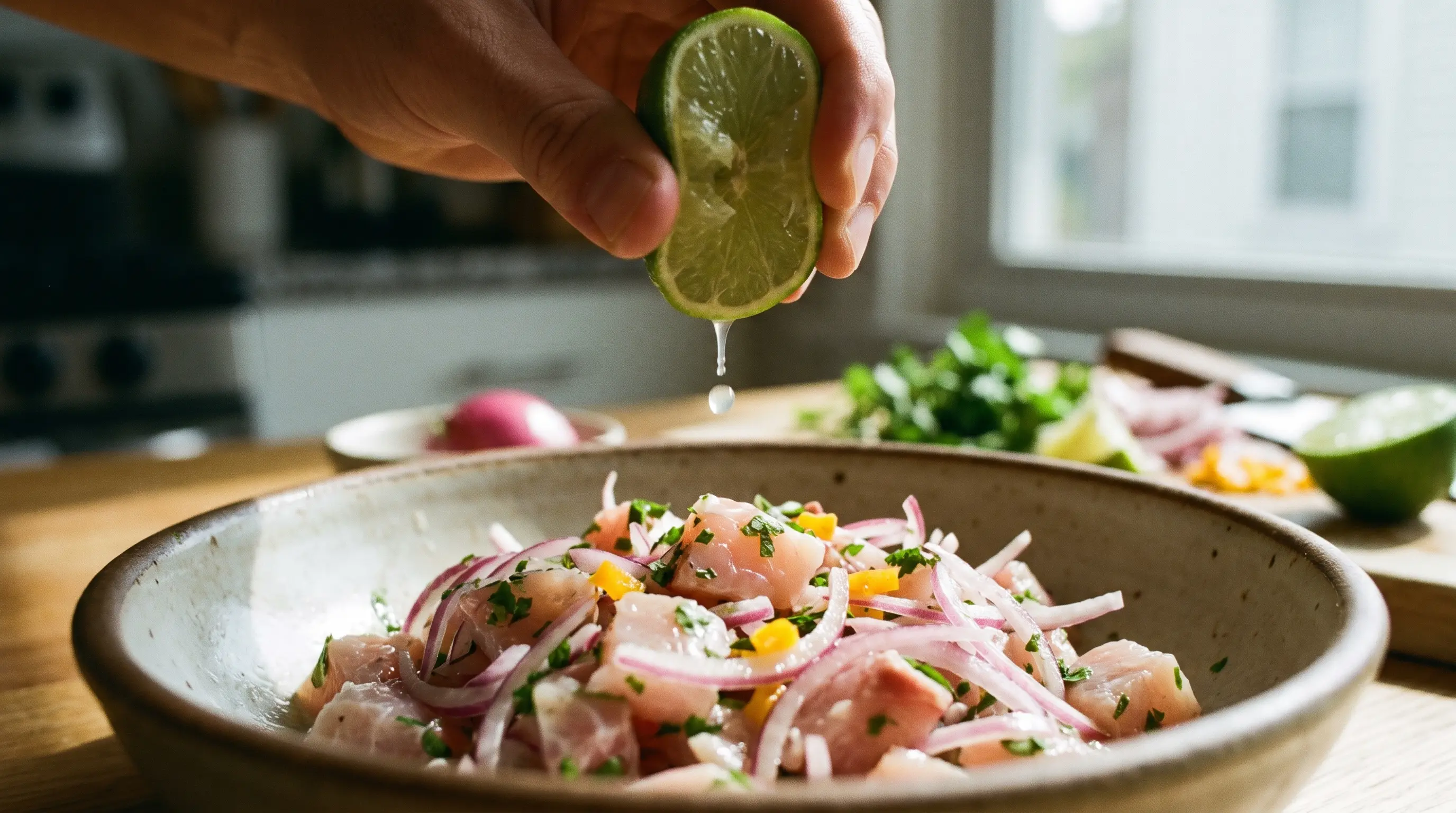
Not native, but completely ours. Image generated with Gemini
Whatever you call it, the squeeze is non-negotiable. Count how many times a lime lands on your table in a single week. Tacos, soup, a cold beer, fruit with chile and salt. It's rarely missing. It finishes the taco, cooks the ceviche, sours the pisco sour and rims the michelada. Aarón Sánchez's Mango-Ají Amarillo Purée was made for ceviche, and our michelada recipe puts lime to work in a glass.
Olives: A Mediterranean Tree With a Peruvian Address
Olives have grown around the Mediterranean for thousands of years, so they arrived in the Americas as old-timers. In 1560, Antonio de Rivera carried olive saplings from Seville to Lima, and the grove that grew from them is now Lima's Parque El Olivar. Spanish missionaries were among the first to plant them, and in southern Peru and northern Chile the trees thrived, giving us Botija olives in Peru and Azapa olives in Chile.
They never left the kitchen. The olive in a Chilean empanada de pino. The green ones in Cuban picadillo. The alcaparrado that goes into so many Puerto Rican pots. More from the Peruvian kitchen lives in our Peruvian food archive.
Latin American Ingredients Never Choose Sides
Three were here first. Two arrived by ship. Put them on the same plate and nobody at the table can tell which is which, because the kitchen settled that question a long time ago. Our food has always been the old and the new at once, and it tastes better for it. Next time you're squeezing a lime over a plate of papas with a tortilla in your hand, you'll know exactly how many centuries and oceans just showed up for dinner.
If you want more of that story, Our Heritage is where we keep it, and Takeout & Talk is where it keeps getting told, one takeout order at a time.